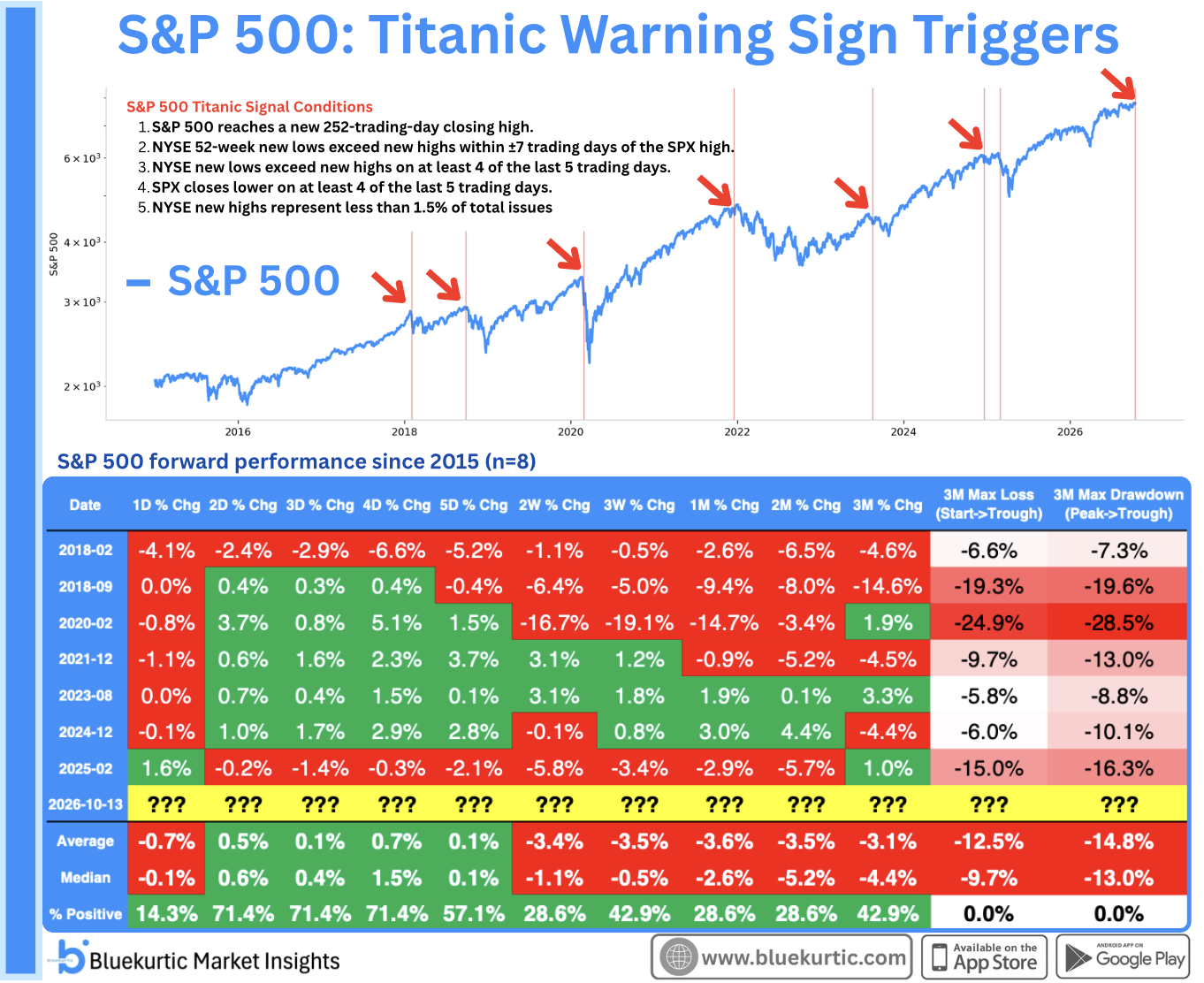
The S&P 500 just triggered a Titanic Warning Signal, which looks more ominous breadth deterioration signal than the Hindenburg Omen.
Since 2018, all seven previous signals occurred near local market peaks, with the S&P 500 subsequently experiencing three-month peak-to-trough drawdowns exceeding 7%. Five of those drawdowns reached double digits, with a median decline of 13%.
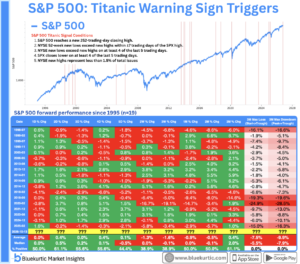
However, extending the analysis back to 1995, including the dot-com boom, reveals a less compelling historical pattern. Several signals proved to be false alarms, with the median three-month return remaining positive at 2%.
The takeaway: Recent history suggests elevated downside risk, but the longer-term evidence cautions against treating this signal as a definitive bearish indicator.
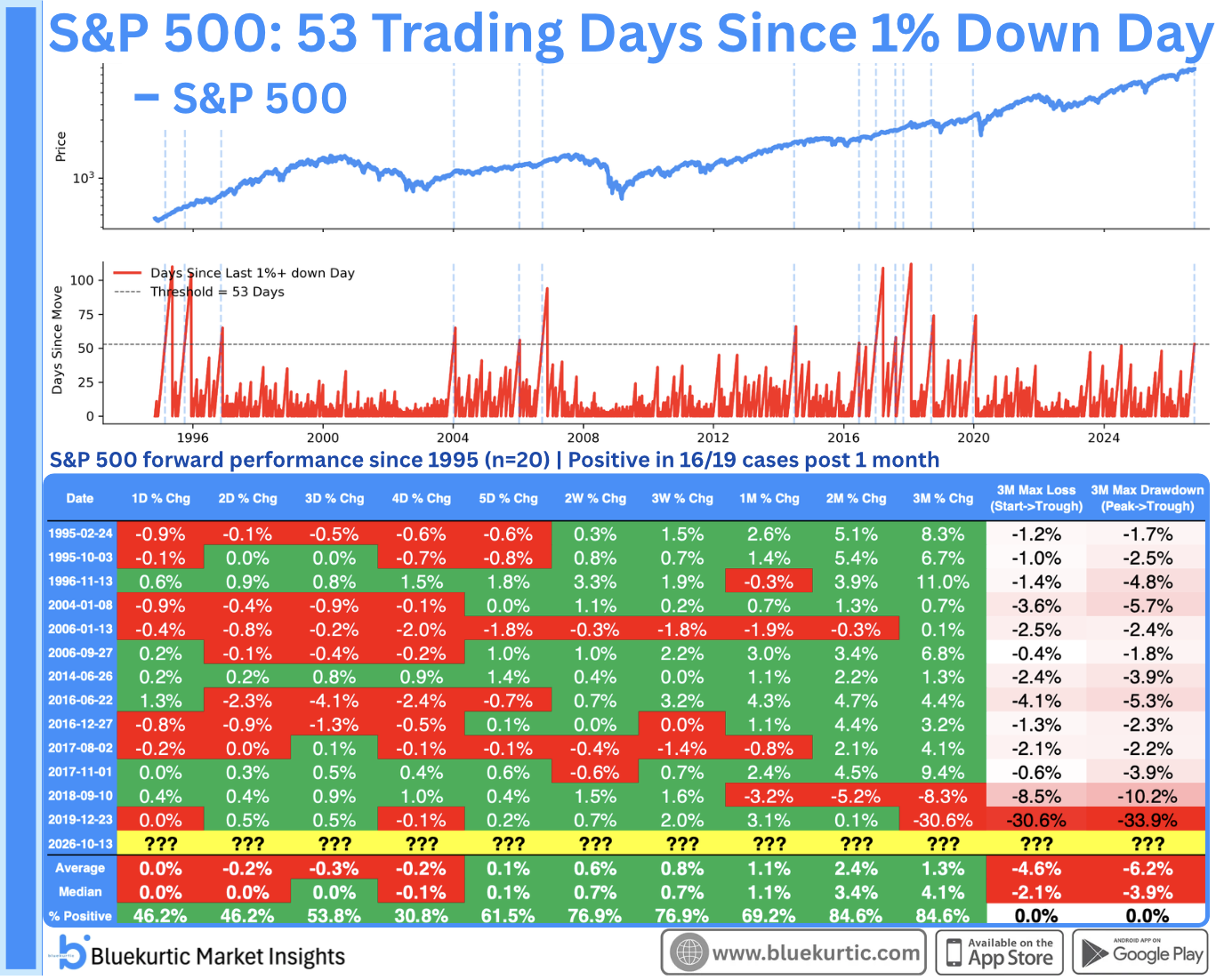
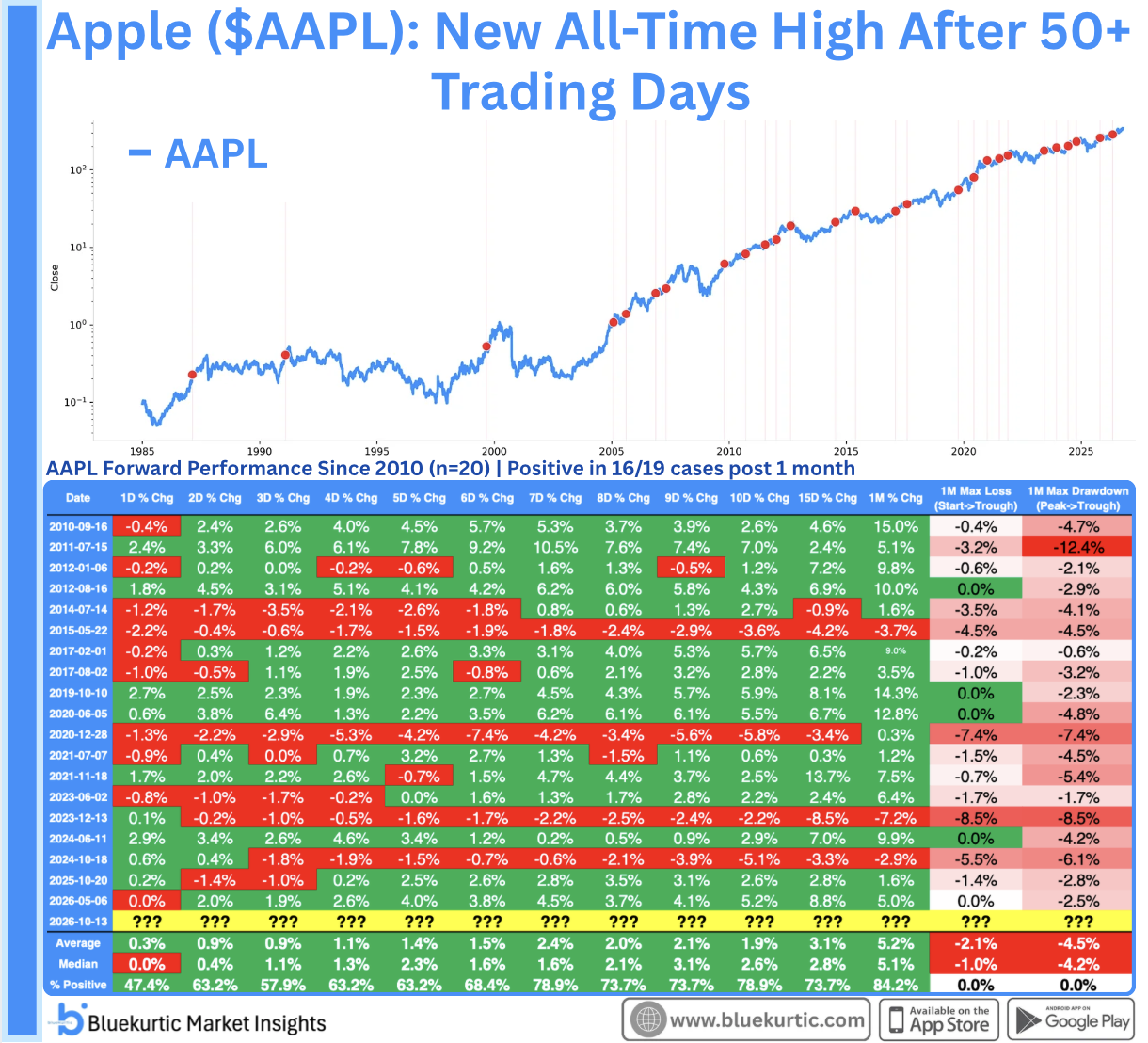
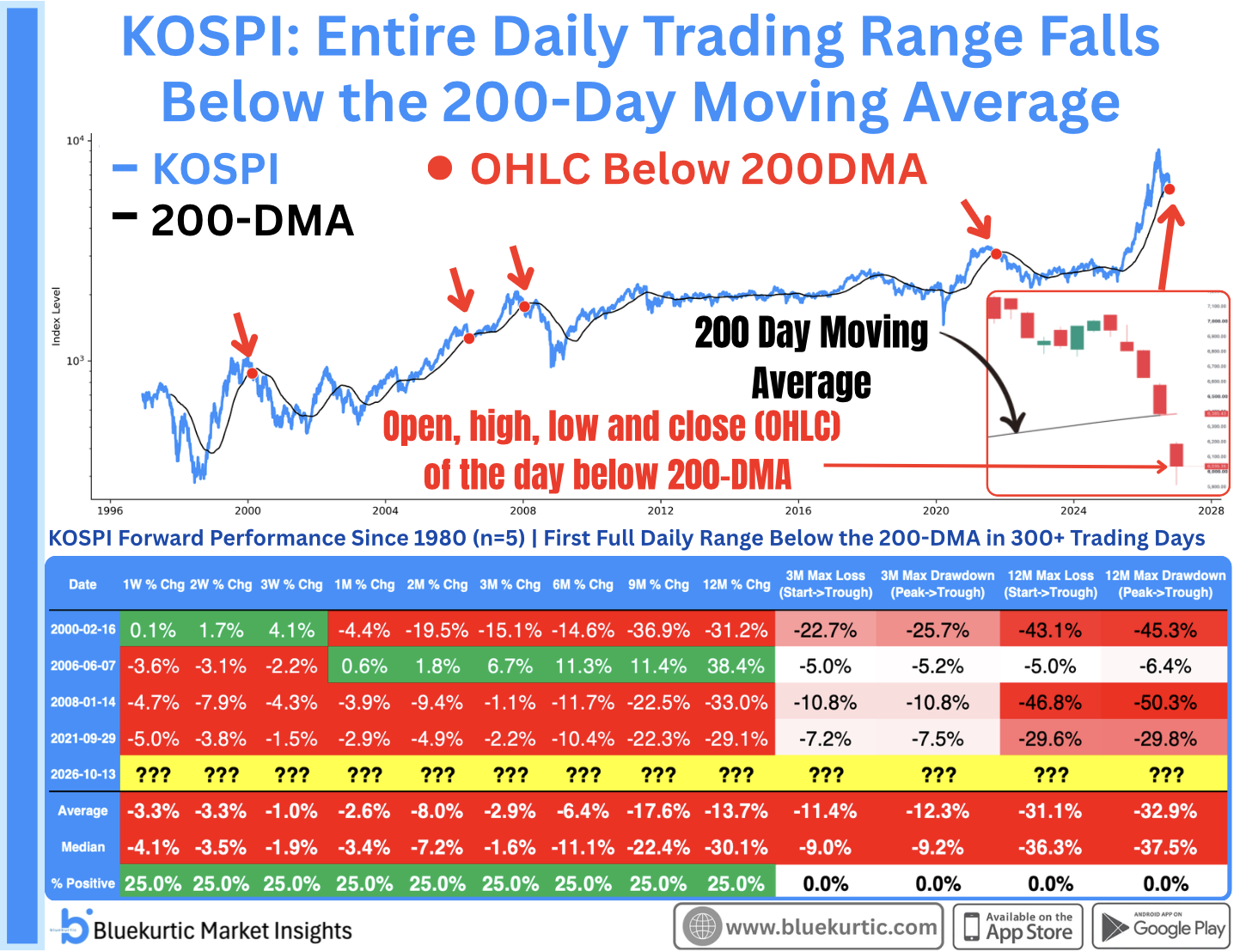
Charts on the Street is our effort to go beyond Bluekurtic’s own research and highlight insights from across the investment community. Each day, we curate charts from analysts, strategists, researchers, and institutions that are publicly available and we believe are worth reviewing.
The inclusion of a chart does not imply that Bluekurtic agrees with its conclusions, forecasts, or investment views. Our goal is to present a broad range of perspectives and research that may help investors better understand the market environment. These charts are not produced by Bluekurtic, and full credit belongs to their original authors.
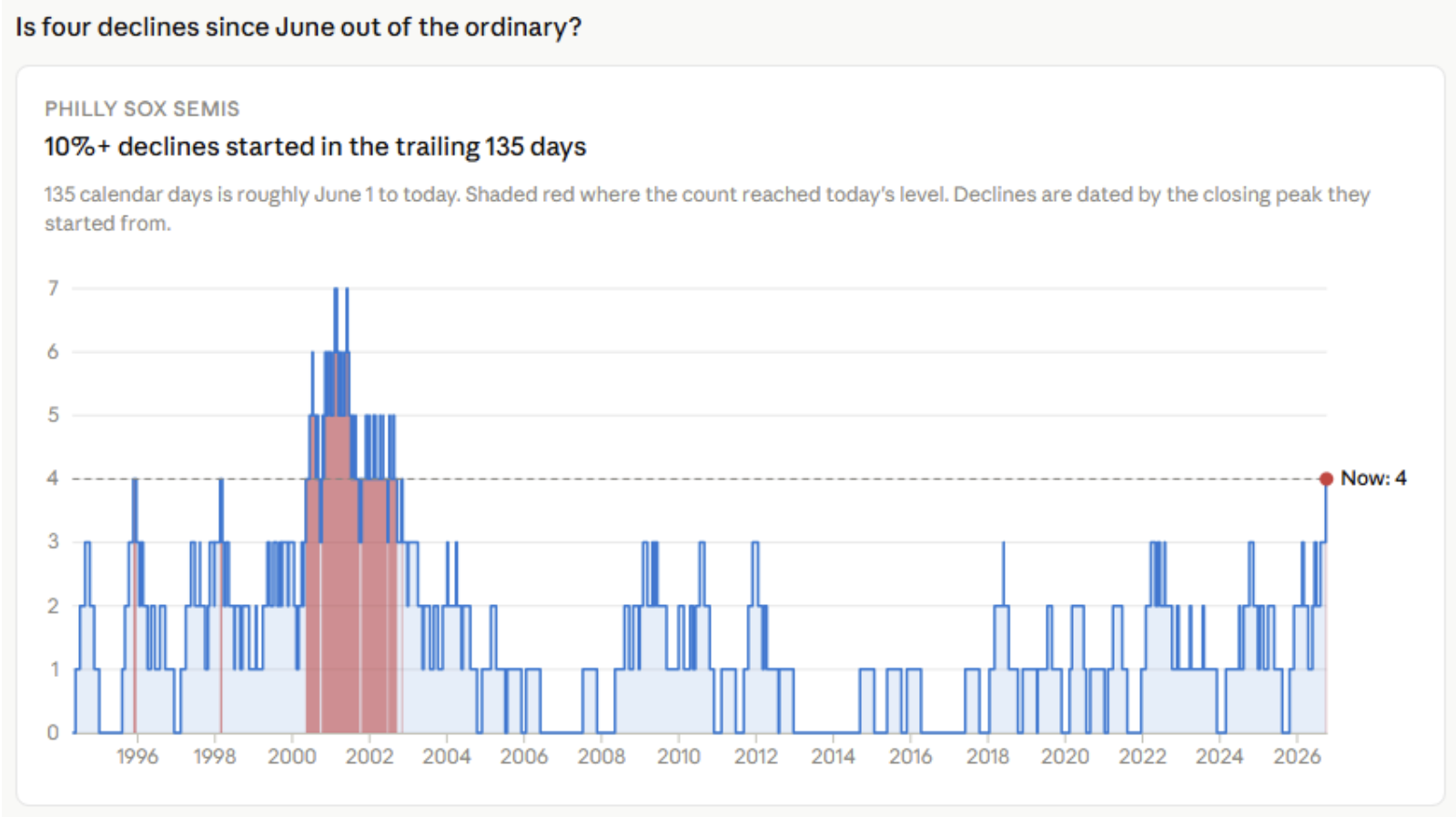
1 – @bespokeinvest: The semis are now in their 4th 10%+ correction since early June. That’s the most corrections inside a window that small since late 2002. $SOXX $SMH


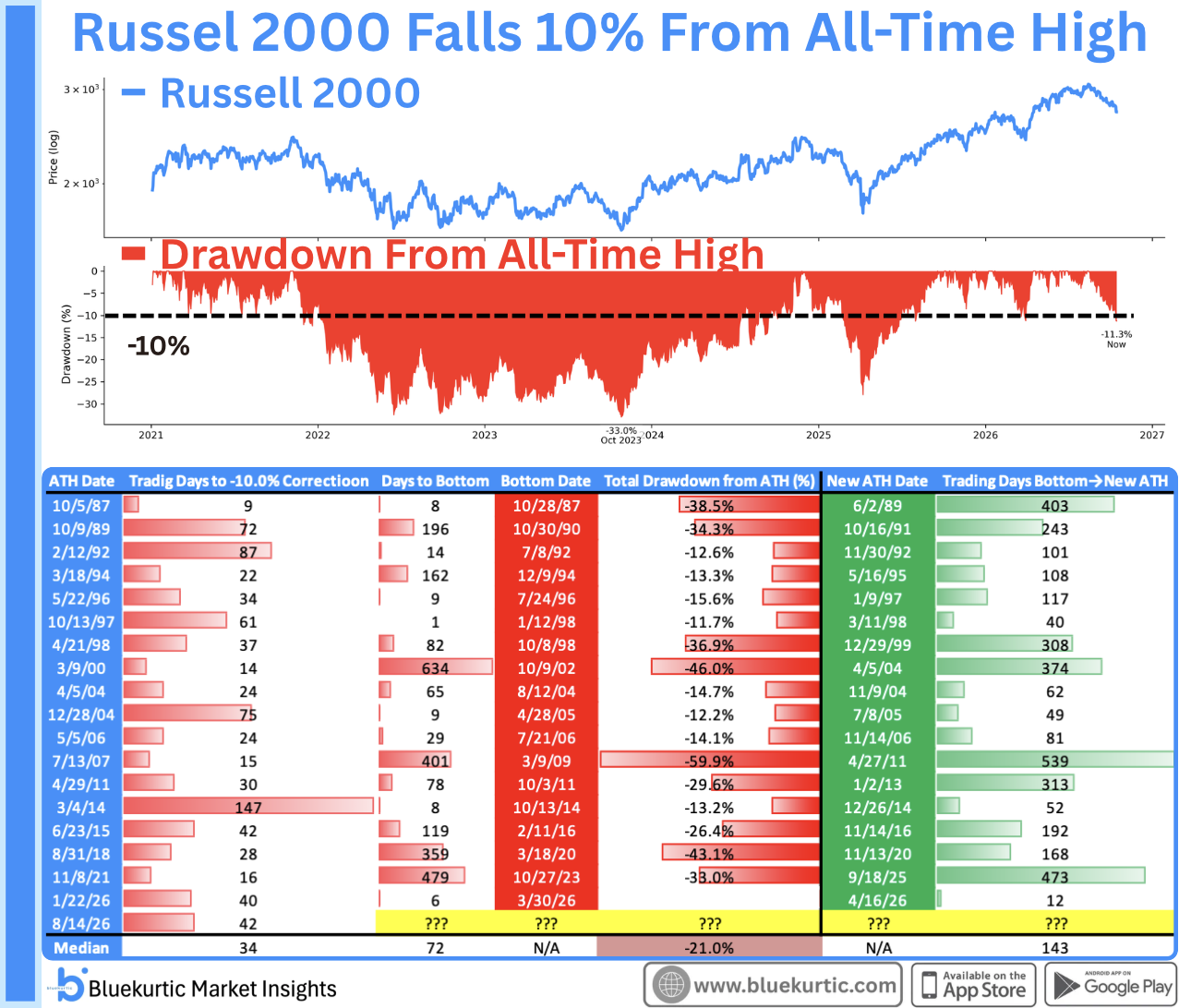
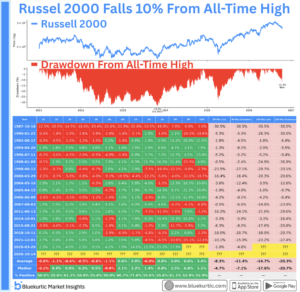
The Russell 2000 ($RUT) has declined more than 11% from its all-time high and appears poised to close in correction territory.
The Russell 2000 has experienced 18 previous corrections of at least 10% from an all-time high. Six of those corrections bottomed within 10 trading days of entering correction territory, while seven required more than 100 trading days to establish a definitive bottom.
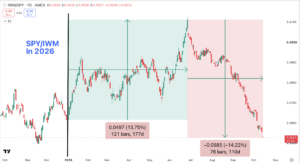
Our preference for large-cap equities remains unchanged. In our 2026 outlook published in December 2025, we explicitly favored large caps over small caps. Although small caps initially outperformed the S&P 500 earlier this year, that relative strength has since reversed. Below is a slide from the outlook.
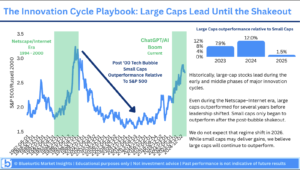
The macroeconomic backdrop reinforces our conviction. With the Federal Reserve maintaining a restrictive policy stance and the prospect of additional tightening, smaller companies remain particularly vulnerable to elevated financing costs and tighter credit conditions. Meanwhile, structural investment in artificial intelligence continues to provide a compelling earnings catalyst for select large-cap companies.
While a tactical rebound in small caps is certainly possible, we see little reason to abandon our strategic preference for large-cap equities. We expect large-cap outperformance to persist as tighter financial conditions continue to weigh disproportionately on smaller companies.
The S&P 500 is trading approximately 0.6% lower following September’s inflation report, which reignited concerns over additional Federal Reserve tightening.
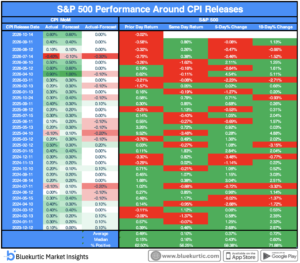
While headline CPI rose 0.6% month-over-month, in line with expectations, core inflation exceeded forecasts at 0.3%. However, the composition of the report warrants closer examination.
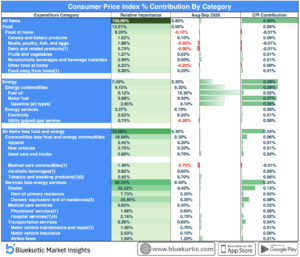
Gasoline alone contributed approximately 0.35 percentage points, accounting for nearly 60% of the headline increase. This suggests that much of the inflationary impulse remains energy-driven, an area where monetary policy has limited direct influence. Nevertheless, persistent shelter and core price pressures deserve attention.
Technical Outlook: The Bullish Structure Remains Intact
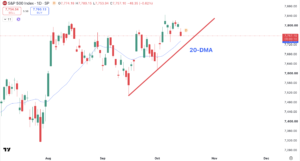
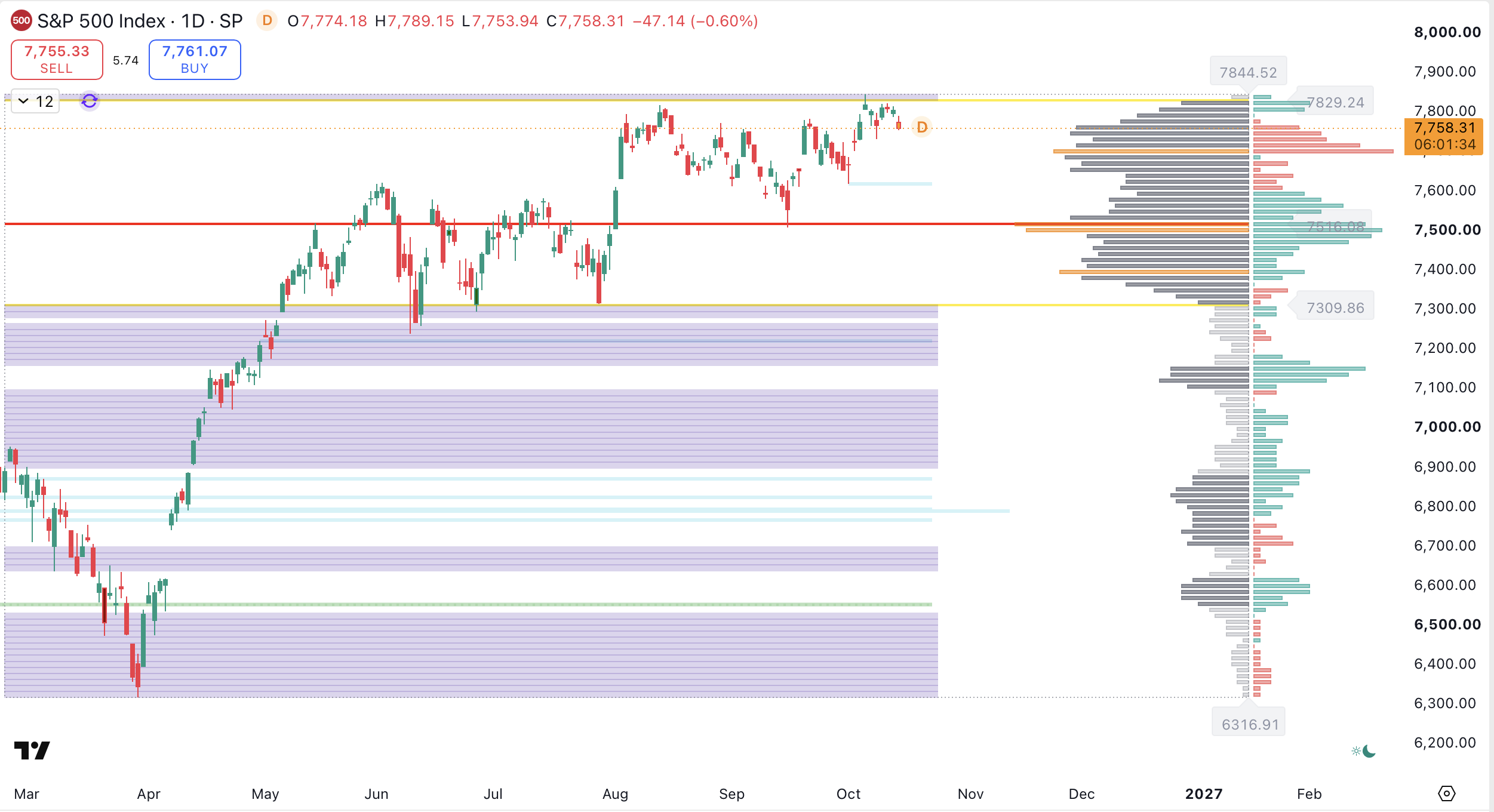
Despite today’s weakness, we believe the S&P 500 remains in a constructive technical uptrend.
The index continues to trade above its rising 20-day moving average, which represents our first immediate support. A decisive breakdown would shift our attention toward the ascending trendline connecting September’s lows.
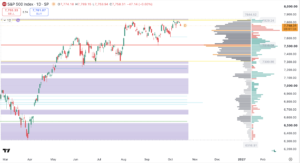
Our more consequential threshold remains the 7,500–7,516 support zone (which we spoke about in the last week’s MI Clip), reinforced by historical price action and significant volume concentration. As we previously emphasized, a sustained breach of this region would warrant reassessing our bullish thesis.
Our October Outlook Remains Unchanged
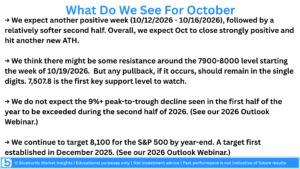
For now, we see insufficient technical evidence to anticipate a significant correction. Our base case continues to favor a positive October close, although near-term volatility cannot be ruled out.
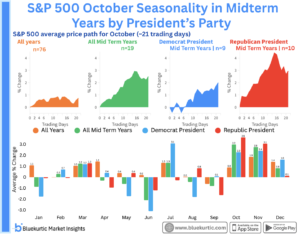
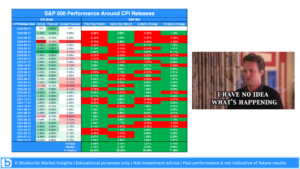
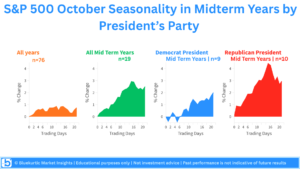
As discussed in last week’s Market Insight Clip, historical seasonality during midterm election years suggests that the latter part of October could experience some consolidation, particularly under Republican administrations. We thought it would take another week to materialize, but it might’ve been triggered soon due to hotter than expected CPI (this is the first hotter than forecast CPI read in the last 10 CPI prints)
We therefore remain constructive on the broader market trajectory while acknowledging the potential for intermittent weakness. Unless key support levels deteriorate, we would interpret the current pullback as consolidation within an established uptrend rather than the beginning of a sustained bearish reversal.
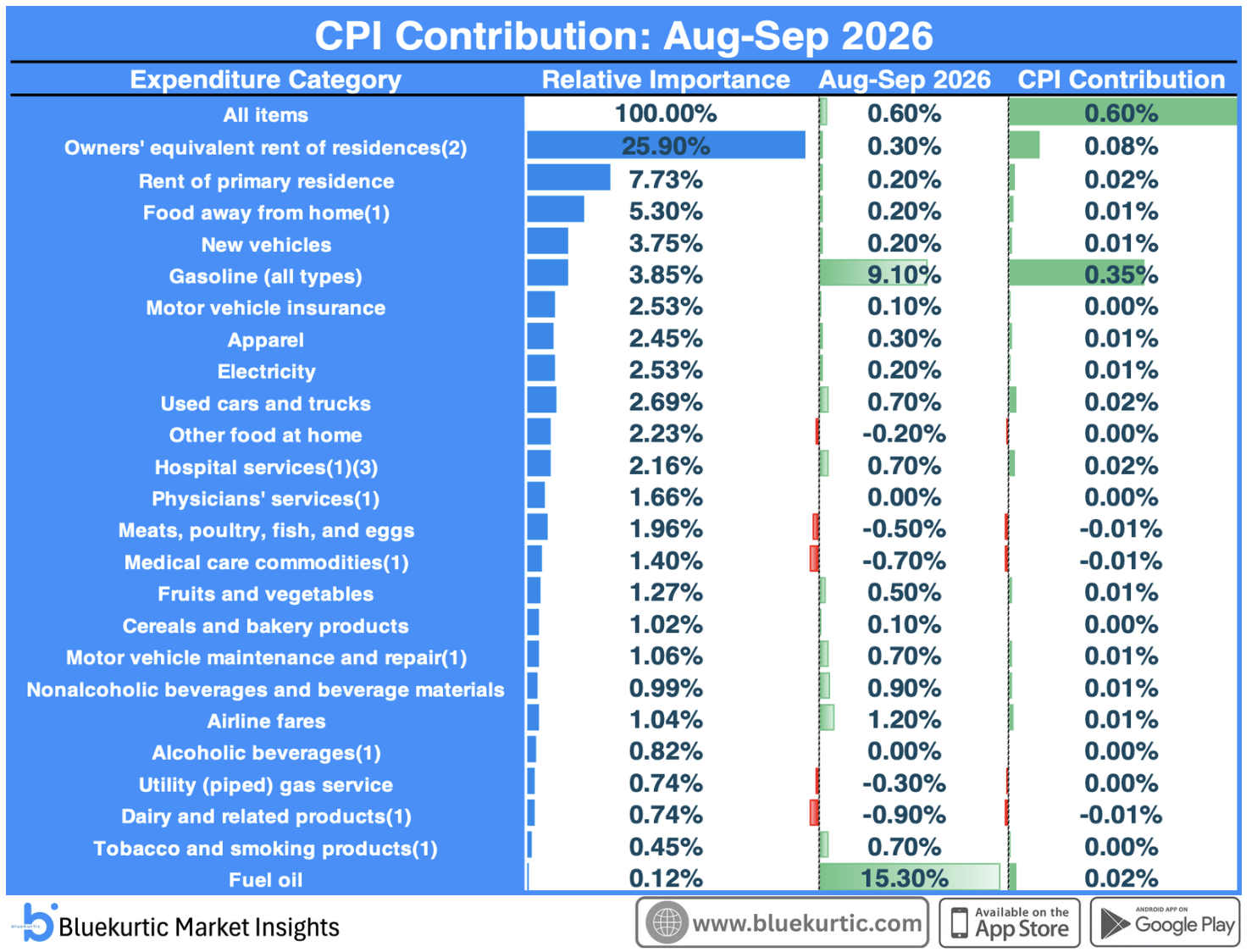
U.S. CPI rose 0.6% month-over-month in September, but the underlying composition tells a different story.
Gasoline prices surged 9.1%, contributing 0.35 percentage points, nearly 60% of the headline increase. Meanwhile, food prices were unchanged, grocery prices declined 0.1%, and medical care commodities fell 0.7%. Core CPI increased a more moderate 0.3%.
Much of this inflationary pressure is energy-driven, reflecting geopolitical disruptions surrounding the conflict in Iran rather than a broad based acceleration in consumer prices.
The Fed has limited influence over global energy supply. Further rate hikes could intensify pressure on already-strained consumers while doing little to alleviate gasoline inflation.
If tensions in Iran ease and energy prices normalize (of course, a big if), we believe this inflationary spike could cool down soon. However, a prolonged energy shock risks spilling over into broader inflation categories, warranting continued vigilance.

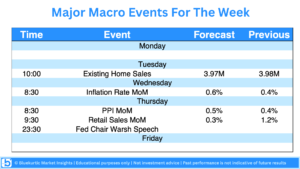
In this week’s Market Insights Clip, we examine the bullish technical signals supporting another positive week for equities, the potential market reaction to Wednesday’s CPI release, and why we expect a relatively softer second half of October.
Key Highlights:
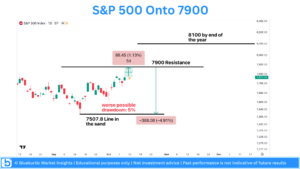
- S&P 500: Why we expect another positive week, potentially pushing the index toward 7,900.
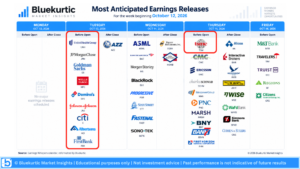
- CPI & Earnings: Key inflation data, Federal Reserve commentary, major bank earnings, and TSMC’s upcoming results.
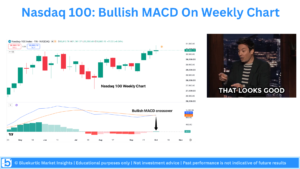
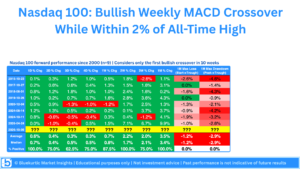
- Nasdaq 100: A bullish weekly MACD crossover with a 100% historical two-week hit rate.
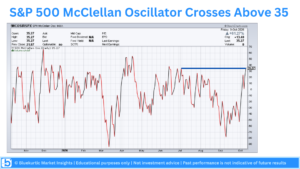
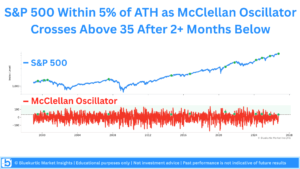
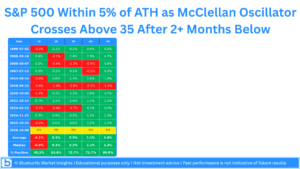
- Market Breadth: The McClellan Oscillator signals improving participation, with the S&P 500 higher five days later in 10 of 11 historical cases.
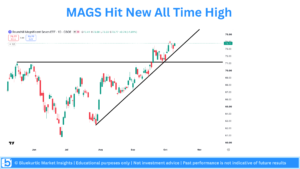
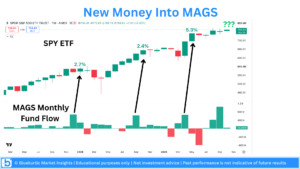
- Magnificent Seven: New all-time highs and strong fund inflows reinforce the bullish outlook.
- October Seasonality: Why historical midterm election patterns suggest potential consolidation during the second half of the month.
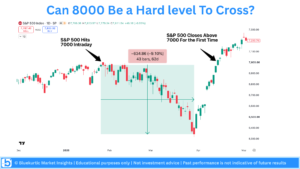
- Key Levels: Resistance at 7,900–8,000, support near 7,508, and our unchanged year-end S&P 500 target of 8,100.
Our Outlook: We expect another constructive week for equities, followed by potentially modest consolidation later in October. Despite near-term risks, our broader bullish thesis remains intact, and we continue to target 8,100 for the S&P 500 by year-end.